
The conversation around Universal Preschool and childcare business adaptation is becoming increasingly important as providers notice preschool-age children leaving earlier, openings taking longer to fill, and family needs beginning to change. But adapting doesn’t mean lowering your rates, abandoning your preschool program, or trying to compete with “free.” In this post, we’re looking at five practical ways successful childcare providers are responding to UPK—including tracking new enrollment patterns, reconsidering the ages they serve, communicating their unique value, identifying unmet family needs, and strengthening the business systems behind their childcare programs.
Five Ways Successful Childcare Providers Are Adapting to Universal Preschool
For years, one of the quiet assumptions I carried in my childcare business was that when I enrolled a younger child, that family would probably remain with me for several years.
A toddler might stay through preschool and then leave when it was time for kindergarten.
Of course, nothing was guaranteed. Families moved, jobs changed, and children sometimes left for other reasons. But there was still a familiar enrollment pattern that made planning a little easier.
Today, that pattern is changing.

As Universal Preschool and Universal Pre-K programs expand, some childcare providers are seeing four-year-olds leave sooner than they once did. Others are finding preschool-age openings harder to fill. And some are wondering whether their family childcare businesses can compete with a program families may view as “free preschool.”
Here in California, for example, Transitional Kindergarten became universally available for children who turn four by September 1 beginning with the 2025–26 school year. Participation is optional, but the program is available at no cost to eligible families. That creates a very real new choice for parents—and a very real business shift for childcare providers.
GET A PRINTABLE AD-FREE VERSION OF THIS BLOG POST HERE FOR ONLY $3!
Want a super handy, printer-friendly version of this blog post—without all the ads? Grab it for just $3!
When you download this printable guide, you’ll get all the information from this post, plus the convenience of having everything in one place. No more scrolling through pages or trying to remember where you saw that key detail! *Of course, grabbing the printable is totally optional—you can still follow along right here on the blog. But if you love a good shortcut (and who doesn’t?), this one’s for you! Just CLICK HERE!
But this isn’t the time to throw up our hands and declare that family childcare is over.
It’s time to adapt.
Successful childcare providers aren’t necessarily the ones who never experience change.
They’re the ones who pay attention, make strategic adjustments, and find new ways to meet the needs of families.
Here are five ways childcare providers can begin adapting to Universal Preschool without panicking, slashing their rates, or completely abandoning the business they’ve worked so hard to build.
Related Reading:
- What You Need to Know About Why Childcare Providers Are Quitting
- How to Save Your Childcare Business In The Face Of Universal Pre-K
- Has Universal Preschool Changed Your Childcare Business

1. They’re Paying Closer Attention to Their Enrollment Patterns
Before you change your entire program, take a good look at what is actually happening.
Not what another provider said is happening.
Not what you’re afraid might happen.
What is happening inside YOUR childcare business?
Ask yourself:
- Are preschool-age children leaving earlier?
- At what age are most children entering your program?
- How long does the average family remain enrolled?
- Which openings are taking the longest to fill?
- Which age groups are generating the most inquiries?
- Are families asking for different schedules or services?
- How much income is affected when a four-year-old leaves?
Maybe you used to enroll a two-year-old and expect that child to remain for three years. If that child now leaves for UPK at age four, your expected enrollment period may be closer to two years.
That means you may need to fill openings more frequently.
That is important business information.
You can’t control every decision a family makes, but you can stop being surprised by a pattern that has already started showing up.
Successful providers are tracking those patterns and using them to plan their marketing, enrollment, and finances more intentionally.

2. They’re Becoming More Intentional About the Ages They Serve
If four-year-olds are leaving earlier, some providers may need to rethink the age groups they market to.
That might mean placing more emphasis on:
- Infant care
- Toddler care
- Mixed-age care
- Sibling care
- Before-and-after-school care
- Summer care
- Part-time arrangements
- Care for children who are not yet eligible for public programs
This doesn’t automatically mean you must stop serving preschoolers.
It means you should look at whether your current enrollment strategy still matches what families in your community need.
Infant and toddler care can be especially difficult for families to find. Your smaller group size, home-like environment, consistent caregiver, and ability to keep siblings together may be incredibly valuable to the right family.
But families need to know those options exist.
Take a fresh look at your website, social media, childcare listings, flyers, and enrollment materials.
Do they clearly state the ages you serve?
Do they explain what makes your program especially valuable for infants, toddlers, siblings, or mixed-age groups?
Or is your marketing still speaking to the same family you were trying to reach five years ago?
Your ideal childcare client may be changing. Your marketing should change with them.
3. They’re Clearly Communicating What Makes Family Childcare Different
You probably cannot compete with “free” by simply lowering your rates.
And honestly, you shouldn’t try.
If a family is choosing a publicly funded preschool program primarily because there is no tuition, reducing your weekly rate by $25 probably won’t change that decision.
It may, however, leave you with less money to run your business.
Instead of competing on price alone, successful providers are getting much clearer about the value they offer.
Let’s make your childcare program even more amazing together! CLICK HERE to see how Adrienne can help you tackle the toughest challenges in your childcare business, boost your growth, and set you on the path to success.
That value might include:
- A smaller, more personal environment
- Consistent care from one primary provider
- Flexible or extended hours
- A home-like setting
- Mixed-age learning
- The ability to keep siblings together
- Meals and snacks
- More individualized attention
- Strong relationships with families
- Care during school breaks
- A particular teaching philosophy or specialty
- Years of childcare experience
- Convenience for working parents
Don’t assume parents already understand those differences.
Tell them.
Show them.
Include those benefits in your tours, website copy, social media posts, enrollment materials, and conversations with prospective families.
Universal Preschool may be one option.
Your childcare program is another option—and it offers value that is uniquely yours.
The goal isn’t to convince every family that UPK is wrong.
The goal is to help the right families understand why your program may be the better fit for them.

4. They’re Looking for the Gaps That Universal Preschool Doesn’t Fill
A preschool program may cover part of a family’s day, but many working parents need more than a classroom experience.
They may still need:
- Early-morning care
- After-school care
- Transportation, where legally permitted
- Care during holidays and school breaks
- Summer care
- Care for younger siblings
- Flexible schedules
- Backup care
- Meals outside school hours
The California Department of Education even acknowledges the continuing need for expanded learning and extended-care opportunities before school, after school, and during summer sessions.
That means UPK doesn’t necessarily eliminate the need for childcare.
It may change WHEN families need it.
This is where paying attention to your community becomes so important.
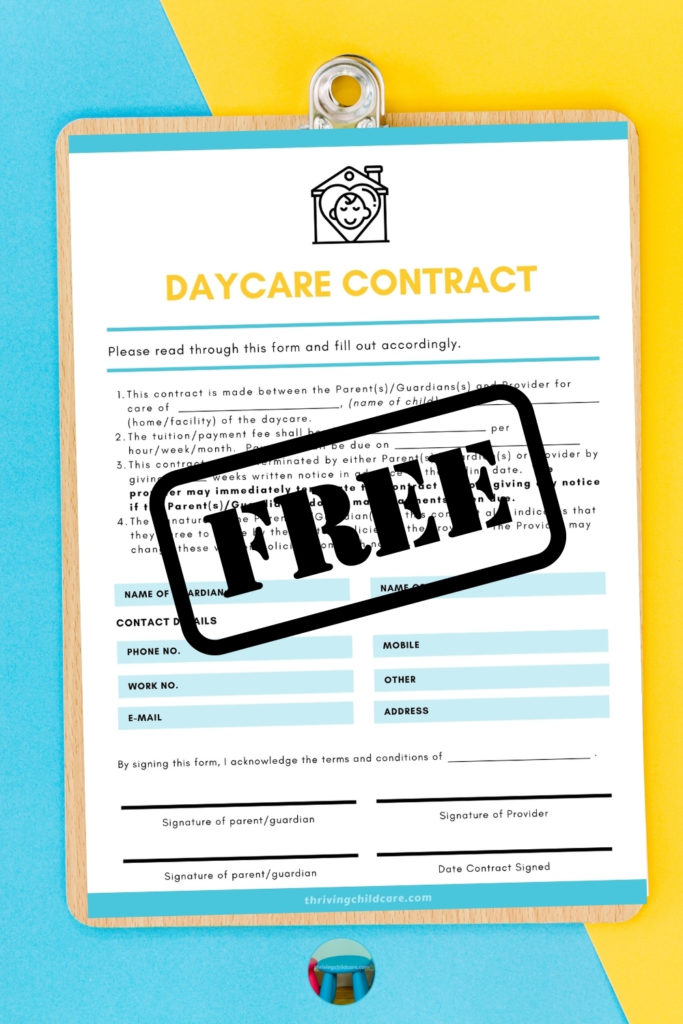
[FREE DOWNLOAD] Here Are The 10 Must-Have Daycare Templates

Talk to current parents.
Listen to prospective families.
Visit local school and district websites.
Learn the hours of nearby programs.
Find out when school breaks occur.
Ask families what part of their schedule is still difficult to cover.
You may discover an opportunity to offer wraparound care, school-break care, or another service that works well with—not against—the public preschool schedule.
Of course, any new service should fit your license, insurance, staffing capacity, transportation requirements, and local regulations.
We are adapting strategically here—not adding twelve new services by next Tuesday and wondering why we’re exhausted. 😩
5. They’re Strengthening the Business Behind the Childcare
When enrollment patterns change, the systems supporting your business matter even more.
This is not the time to become casual about:
- Tracking income and expenses
- Collecting tuition
- Charging appropriate fees
- Conducting professional tours
- Following up with prospective families
- Communicating with parents
- Enforcing policies
- Keeping business records organized
- Planning monthly goals
An uncertain enrollment season can tempt a provider to loosen everything.
You may stop charging a fee because you don’t want a family to leave.
You may accept a schedule that doesn’t work for your business.
You may overlook late payments.
You may say yes to every request because an empty spot has you nervous.
But fear is not a business system.
Successful providers are using this season to make their businesses stronger, not more fragile.
They’re reviewing their rates.
They’re improving their enrollment process.
They’re updating their tours.
They’re putting expectations in writing.
They’re looking at their numbers.
They’re creating repeatable systems instead of handling every situation from scratch.
And they’re making sure their businesses are prepared for whatever changes come next.
Universal Preschool May Change the Landscape—But You Still Have Options
I’m not going to pretend Universal Preschool isn’t affecting childcare providers.
For some providers, it absolutely is.
Children may leave earlier.
Preschool openings may become more difficult to fill.
Enrollment patterns may be less predictable.
The services families need may change.
But change does not automatically mean the end of your childcare business.
It means you need to become curious.
What is changing?
What do families still need?
What makes your program different?
Which ages should you market to?
Which services make sense for your business?
Which systems need to become stronger?
Those are CEO questions.
And the sooner you begin answering them, the sooner you can move from worrying about what UPK might take away to recognizing the opportunities your childcare business may still have.
You Don’t Have to Figure Out Every Next Step From Scratch
Adapting your childcare business may involve improving several areas at once.
You may need help attracting families.
You may need a stronger childcare tour.
You may need to ask prospective parents better questions.
You may need to tighten up tuition collection, review your fees, communicate more effectively, or become more organized.
That’s why I created The Daycare Provider’s Toolbox.

It’s a comprehensive library of provider-focused guides, templates, checklists, and business resources covering enrollment, tours, tuition, fees, licensing, hiring, parent communication, organization, and business planning.
Instead of opening another 57 browser tabs and trying to piece everything together yourself, you can have practical tools ready when your business needs them.
You already have the passion. Now get the tools.
👉 [GET THE DAYCARE PROVIDER’S TOOLBOX →]
The Providers Who Adapt Will Be the Providers Who Keep Moving Forward
The childcare industry has changed before.
It will change again.
Successful providers won’t be the ones who spend all their energy wishing everything would return to the way it used to be.
They’ll be the ones who understand what families need now, clearly communicate their value, strengthen their business systems, and make thoughtful adjustments without giving away everything that makes their programs special.
Universal Preschool may be changing the childcare landscape.
But there is still room for experienced, caring, professional childcare providers who are willing to adapt—and keep thriving. ❤️